3D
VIRTUAL
TOURS
Designed for luxury hotels, resorts, golf courses and convention venues.
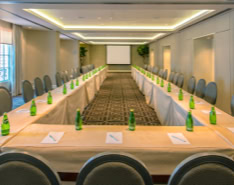
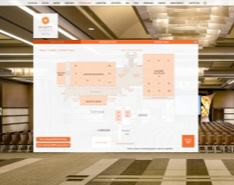
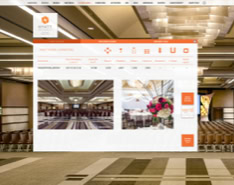
For hotels, resorts, golf clubs, and convention venues, a Matterport 3D virtual tour is more than a visual presentation — it becomes a practical sales and planning instrument.
Designed specifically for hospitality environments, each tour allows meeting planners, corporate clients, and event organizers to explore spaces remotely with clarity and confidence. Ballroom layouts, foyers, breakout rooms, terraces, and pre-function areas can be reviewed as if walking the property in person.
Each individual meeting space can also be embedded independently within a Meeting Planner eBrochure or a corporate website. This allows sales teams to present a specific ballroom, conference room, or event space with its own description, capacities, and specifications — without forcing the viewer through a full-property navigation.
Inside the virtual tour, interactive highlight markers can be positioned anywhere in the space — on ballroom tables, stage areas, lighting rigs, or architectural elements.
These markers allow the hotel to present:
• Table sizes and configurations
• Standard lighting setups
• Stage dimensions
• AV availability
• Ceiling heights
• Custom layout information
All contextualized exactly where they matter — inside the room itself.
The virtual tour functions as a continuous architectural flow.
From a meeting room, the viewer can exit into the foyer, continue to pre-function areas, move into additional ballrooms, and explore connected spaces — all without navigating to a separate page.
This uninterrupted movement creates a natural understanding of spatial relationships and guest flow — critical for event planning.
In addition to interactive navigation, we provide a professionally produced video walkthrough of meeting spaces.
This guided presentation offers a curated perspective — highlighting scale, atmosphere, and key functional elements — ideal for presentations, email follow-ups, and executive review.
Matterport Pro3 lidar capture allows users to take real measurements directly within the virtual environment.
Meeting planners can measure:
• Wall lengths
• Stage depth
• Table dimensions
• Ceiling height
• Distance between architectural elements
This capability reduces uncertainty and accelerates decision-making during the planning process.
Beyond hospitality sales applications, 3D virtual tours serve as a valuable architectural tool.
Using lidar-based spatial capture, projects can be documented during construction phases, renovations, or completed developments. Architects, engineers, and contractors can review accurate spatial records, validate dimensions, and reference structural elements remotely.
This dual-purpose capability — sales presentation and architectural documentation — makes Matterport capture a long-term asset rather than a single-use marketing tool.