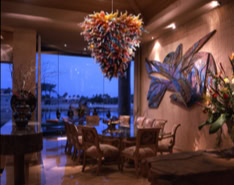
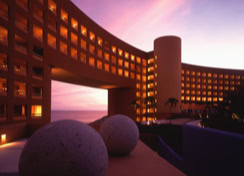
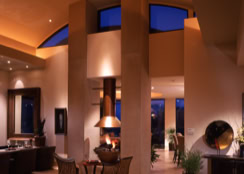
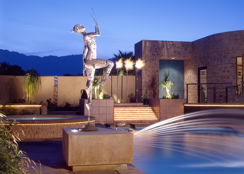
Built environments demand more than aesthetic representation.
They require spatial accuracy, material fidelity, and respect for proportion.
Each project begins with understanding — not styling.
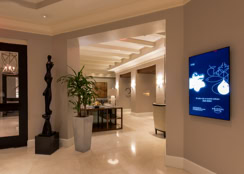
Architecture is experienced in volume, alignment, and flow.
Photography and spatial capture must preserve the true relationships between vertical lines and horizon, depth and circulation, scale and human proportion, material and light interaction.
Precision in capture protects the integrity of the design — not just its appearance.
In architectural environments, light is not decoration.
It reveals material texture.
It defines planes.
It shapes volume.
Careful control of natural and artificial light ensures that the built environment is represented as intended — not exaggerated.
Where required, projects integrate LiDAR and spatial alignment tools to maintain dimensional integrity between digital representation and physical structure.
Accurate vertical correction, faithful scale representation, and alignment with architectural plans ensure that what is presented reflects what was built.
Architecture deserves precision.